The Problem and Motivation Behind
“Women and girls travel long distances looking for firewood … They face risks like harassment, assault, and even exposure to heavy rains. And after all that effort, the firewood only lasts two to three days before they have to go out again.” – Isaac.
IsaacMalish Isaac (25-year-old) and his team live Bidibidi Refugee settlement in Yumbe, Uganda, where they witnessed first-hand how women in their settlement faced hardships and risks resulting from collecting the firewood – the primary source of cooking fuel Additionally, they noticed how cutting tress led to massive destruction for the surrounding forests. “The trees around us are disappearing, and it’s affecting the climate. Sometimes we get too much sunshine, sometimes too much rain—we can no longer predict the seasons,” Isaacsays.
The Innovative Solution
When Isaac and his team joined the Youth Innovation Lab (YIL) under the EU-funded Project RED, they decided to address the problem of forest destruction and energy poverty in their settlement. They applied design thinking process, in which they gathered information and generated ideas for constructing energy-efficient cookstoves that require significantly less firewood or charcoal compared to traditional methods. To further develop their ideas, YIL facilitated their market exposure when they were supported to attend a trade show in another district, called Arua, where they connected with other innovators and discovered new cooking technologies. They also received essential training and mentorship support, learning how to construct metallic cookstoves and gaining essential business skills such as budgeting and financial planning. Reflecting on this support, Isaacnotes, “At first, we had the idea but no way to move forward. YIL gave us exposure and the chance to be heard.”
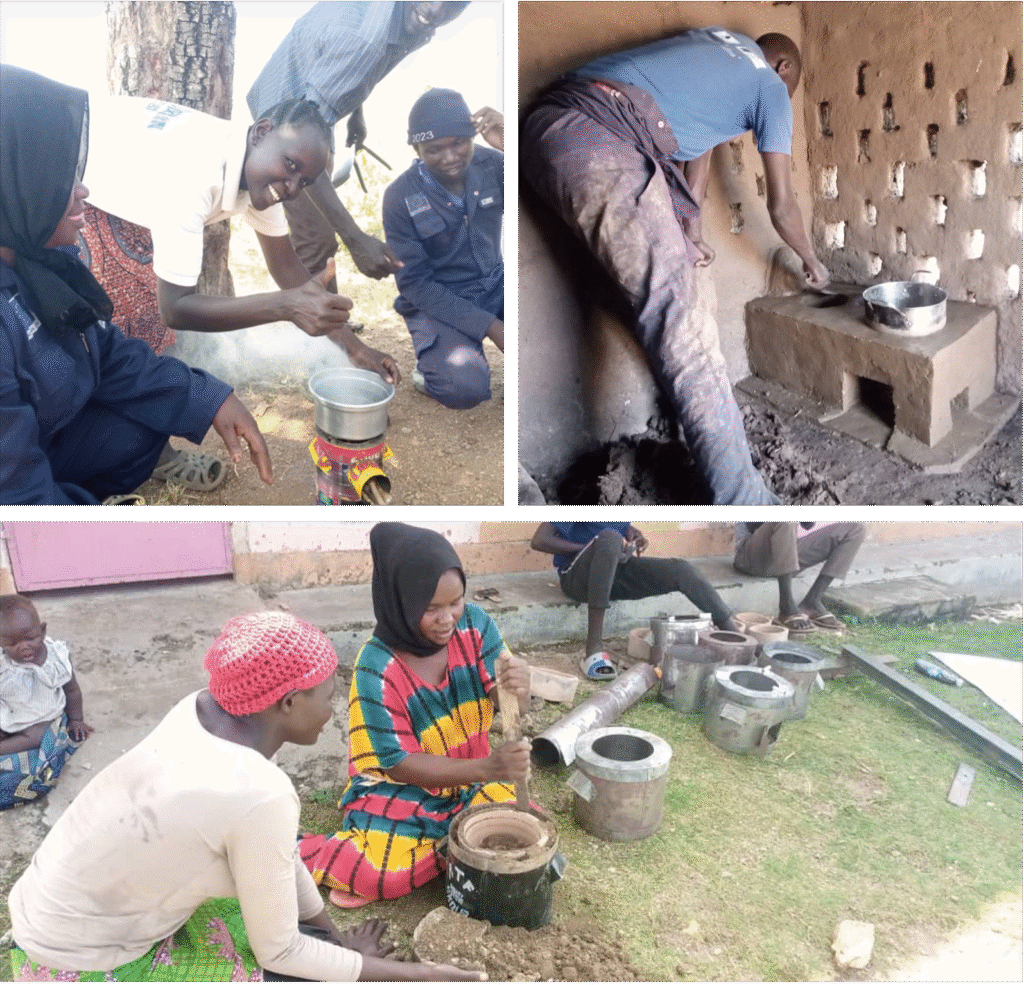
After cycles of developing prototypes and testing them, they came out with two types of energy-efficient cookstoves that users’ feedback proved that they are effective and sustainable alternative to traditional firewood cooking:
- Lorena[1] Stoves – Made using locally available materials such as clay soil, dry grass, and water, these stoves are built in homes and consume less firewood, reducing the need for frequent collection trips.
- Metallic Cookstoves – These are portable, durable stoves with liners that improve heat retention, allowing families to cook with less fuel. The materials are sourced from suppliers in Kampala.
Since they started, the team has built and sold over 870 cookstoves[2], proving that their solution is both practical and in high demand. According to Isaac, their energy-efficient stoves has brought about positive changes on multiple levels. Environmentally, households are cutting down fewer trees, significantly reducing deforestation and helping to protect local ecosystems. This shift to sustainable cooking methods also enhances women’s safety and well-being, as women and girls now spend less time collecting firewood, reducing their risk of violence and allowing more time for education or income-generating activities.
Economically, their solution has empowered youth by providing income opportunities through stove production and sales. Many young people, including Isaac, have been able to support their families, with Isaacproudly sharing, “Because of this project, I now have goats and chickens for my family.” Moreover, families using these cookstoves benefit from household savings, as they spend less money on firewood, making their daily lives more affordable. Through these combined impacts, Ready to Frame has not only enhanced environmental sustainability but also improved the livelihoods and safety of the community.
Lessons Learned and Addressing Challenges
- Attending mentorship and training sessions to fill knowledge gaps: The team initially lacked the technical skills required to enhance their cookstove designs. To address this, they participated in mentorship sessions, trade shows, and training workshops, gaining knowledge from experts in energy efficiency. The mentorship also helped them develop business skills like budgeting and financial planning, which proved vital for sustaining the project. Attending mentorship and training sessions to fill knowledge gaps equips youth with the necessary skills to innovate and improve their projects.
- Building networks to foster growth and new opportunities: The Youth Innovation Lab (YIL) also played a key role in helping the team establish networks with NGOs. These connections led to new partnerships, including opportunities to build institutional stoves for schools and communities. Building networks to foster growth opens avenues for collaboration and enhances the project’s sustainability.
- Creating a constitution to maintain group commitment: Some members left the group because they expected quick financial returns rather than focusing on long-term sustainability. To address this, the team created a constitution that clearly outlined commitment expectations and shared goals, ensuring that members remained dedicated to the project’s vision. Creating a structured framework for commitment helps maintain group cohesion and ensures sustained involvement.
- Setting up a savings plan and leveraging support to overcome limited resources: Initially, Ready to Frame faced a lack of funding and equipment, which hindered their progress. To address this challenge, the team set up a savings plan and sought support from Save the Children and other partners, allowing them to acquire the necessary tools and materials. Additionally, the Youth Innovation Lab (YIL) provided a seed grant to purchase better equipment. Setting up a savings plan and leveraging external support to overcome resource limitations helps youth-led initiatives secure essential equipment and sustain their projects.
- Acquiring transport support to resolve logistical issues: Transporting materials and finished cookstoves was challenging with just one tricycle, limiting their ability to expand. To address this logistical issue, YIL provided transport support by giving them an additional tricycle, making it easier to deliver products and reach more customers. Working towards acquiring reliable transport through external support significantly improves distribution efficiency and project reach.
Next Steps and Future Aspirations
Isaacenvisions a future where Ready to Frame becomes a leading provider of sustainable energy solutions: “We want to make sure every home has an energy-efficient cookstove, not just in our settlement, but across the country.” To do so,Isaacand his team have a plan for their next steps as follows:
- Expanding Production – They aim to increase output by securing more raw materials and equipment.
- Growing Training Programs – They hope to train more youth in cookstove construction, expanding their impact beyond the settlement.
- Constructing Institutional Stoves – They plan to build large cookstoves for schools and community kitchens, reducing firewood dependency on a larger scale.
- Introducing New Energy Technologies – They are exploring ways to incorporate advanced designs for even more efficient cooking solutions.
- Purchasing Additional Transport – A larger vehicle would allow them to reach more customers and transport stoves to different districts.
[1] The name “Lorena” is a combination of the Spanish words “lodo” (mud) and “arena” (sand).
[2] This number may have increased from the time of the conducting the interview with Issac in December 2024.